Distribution transport
Container transport
Construction machinery
Municipal/ Special vehicles


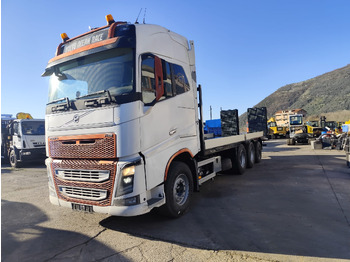

A heavy-duty truck is a high-capacity commercial vehicle engineered for the toughest transport tasks — from long-distance freight to heavy construction loads. Dominating long-haul logistics, construction, mining, and heavy haulage, these vehicles combine high payload, powerful drivetrains, robust chassis, and advanced safety to deliver reliable performance and low total cost of ownership.
Leading Brands and Series
The European heavy-duty segment is led by manufacturers known for uptime, torque, and fuel efficiency. Popular long-haul and construction lineups include:
- Volvo FH / FH16 — high safety standards and up to 750 hp for heavy loads.
- Scania R & S (incl. V8) — renowned for torque, durability, and fuel-efficient powertrains.
- Mercedes-Benz Actros — Euro 6 efficiency with advanced assistance systems for long-haul.
- MAN TGX — balanced power economy for fleet operations and high-mileage duty cycles.
- DAF XF / XG+ — spacious cabs and low operating costs in long-distance haulage.
- Renault K / T — robust chassis for construction and long-haul versatility.
Heavy-Duty Truck Prices in Europe
Prices depend on brand, year, mileage, axle configuration (e.g., 4x2, 6x2, 6x4, 8x4), and emission standard (Euro 5 / Euro 6). Typical ranges for used heavy-duty trucks for sale in Europe:
- Entry-level Euro 5 with higher mileage: €20,000–€35,000
- Well-maintained Euro 6 (mainstream specs): €40,000–€75,000
- Late-model premium (Volvo FH, Scania V8, Actros) with low mileage: €75,000–€95,000+
European Heavy-Duty Trucks Market Overview
The European market remains highly competitive, driven by cross-border freight, construction demand, and ongoing fleet renewals. Buyers increasingly prioritize Euro 6 compliance, fuel efficiency, and driver assistance systems. There is also a gradual shift toward alternative fuels (e.g., HVO, LNG) and digital fleet management. Germany, the Netherlands, and Poland are among the most active hubs for exports and competitive used stock availability.
European Regulations and Standards
- Euro 6 Emission Standards — lower CO₂ and NOₓ; many cities favor Euro 6 entries.
- Advanced Driver Assistance Systems (ADAS) — AEB, LDW and other features improve safety and compliance.
- LEZ/ZEZ Access — low/zero-emission zones restrict older trucks; check local requirements before purchase.
- Licensing — Category CE for articulated heavy goods vehicles (HGV) in most EU countries.
- EU Type Approval — ensures vehicles meet harmonized safety and environmental standards across the EU.
Key Factors When Choosing
- Payload & GCW — match gross combination weight and payload to your routes and trailer types.
- Engine Power & Torque — critical for gradients, heavy loads, and consistent cruise speeds.
- Axle Configuration — select 4x2, 6x2, 6x4, 8x4 based on terrain, traction, and load distribution.
- Fuel Efficiency — modern Euro 6 drivetrains and aero packages reduce operating costs.
- Chassis & Frame Condition — inspect for corrosion, fatigue, and any structural repairs.
- Service History & Uptime — documented maintenance reduces risk; check intervals and key component replacements.
- Safety & Compliance — ADAS, retarder, braking systems, tachograph integrity, and LEZ readiness.
How to Buy Used Heavy-Duty Trucks on Truck1
Step 1: Define Your Duty Cycle
Specify routes, average GCW, gradients, and trailer types. Decide on engine power/torque and axle configuration to match your operation.
Step 2: Apply Search Filters
Use brand, model, year, mileage, emission standard, engine power, and chassis options to narrow results. This is ideal when searching for heavy-duty trucks for sale near me or across Europe.
Step 3: Compare Listings
Review price vs. condition, service records, and spec (retarder, PTO, hydraulics). Contact sellers for maintenance proofs and inspection reports to confidently buy heavy-duty trucks.
Step 4: Contact the Seller
Use the “Contact the seller” form to discuss terms, inspection, delivery, and payment.
Step 5: Register for Faster Communication (Recommended)
Creating an account speeds up messaging and improves dealer response handling.
Step 6: Post a Wanted Ad (Optional)
If you can’t find the exact truck you’re looking for, submit a "I'm looking for" form. Your request will be sent to verified dealers, and they will contact you with matching offers.
Find Your Next Heavy-Duty Truck Today
Whether you need a fuel-efficient long-haul tractor or a high-torque 6x4 for construction, Truck1 connects you with trusted sellers across Europe. Browse used heavy-duty trucks for sale and secure the best fit for your fleet.
Frequently Asked Questions
What is a heavy-duty truck?
A heavy-duty truck is a commercial vehicle built for transporting large or heavy loads over long distances or demanding terrain. In Europe, these trucks belong to the N3 category — vehicles with a gross vehicle weight (GVW) exceeding 12 tonnes. They feature reinforced chassis, high-torque engines, and multi-axle configurations designed for construction, logistics, and industrial transport.
What trucks are considered heavy duty?
Heavy-duty trucks include tractor units, tippers, low loaders, heavy haulers, and construction trucks with GVW above 12 tonnes. Models such as Volvo FH, Scania R/S, Mercedes-Benz Actros, MAN TGX, and DAF XF are typical examples of heavy-duty vehicles used for long-haul freight, mining, and heavy construction tasks.
What is the classification of a heavy-duty truck?
In the European Union, heavy-duty trucks are classified under the N3 category — motor vehicles designed for the carriage of goods with a gross vehicle weight above 12,000 kg. Lighter trucks (N2) range from 3.5 to 12 tonnes, while N3 covers the heaviest vehicles, including articulated tractor units and multi-axle rigid trucks.
What is the capacity of a heavy-duty truck?
The payload capacity of a heavy-duty truck typically ranges from 15 to 30 tonnes, depending on axle configuration (4x2, 6x4, 8x4), body type, and suspension. The gross combination weight (GCW) for articulated setups can reach up to 40–44 tonnes under EU road transport regulations.